Starting or growing a business takes more than a great idea. Discover how mentorship, professional connections, and local resources can help entrepreneurs build stronger, more sustainable businesses.
Entrepreneurship is often portrayed as an individual pursuit: one person with a big idea, a laptop, and the determination to make something happen. But behind many successful businesses is something less visible and just as important: a community of people sharing knowledge, making introductions, offering encouragement, and helping one another navigate challenges.
Whether you're launching your first business, freelancing full-time, managing a small team, or exploring an idea alongside your day job, the people you connect with can be just as valuable as the tools you use.
And building that network doesn't have to mean attending formal networking events or collecting business cards. Sometimes, it starts with a conversation over coffee.
Why Community Matters for Entrepreneurs
Running a business requires making decisions across areas you may have little experience in, from marketing and finances to operations, hiring, and customer relationships.
It's a lot for one person to navigate.
A strong professional community gives entrepreneurs access to perspectives, experiences, and opportunities they might not encounter on their own.
The benefits extend beyond finding new customers. Meaningful connections can help you:
Solve problems faster. Learn from people who have navigated similar challenges instead of figuring everything out through trial and error.
Discover opportunities. Referrals, partnerships, collaborations, and new clients often begin with existing relationships.
Build confidence. Talking through an idea with someone who understands entrepreneurship can help you identify your next step.
Expand your knowledge. Exposure to different industries, backgrounds, and approaches can inspire creative solutions.
Stay motivated. Having people who understand the challenges of independent work makes it easier to maintain momentum.
The goal isn't to know everyone. It's to develop relationships with people who help you grow—and whose growth you can support in return.
Find Your People: Peers, Mentors, and Professional Support
Not every professional connection serves the same purpose. Understanding what kind of support you're looking for can make building your network much more intentional.
Connect with other entrepreneurs
Your peers don't necessarily need to work in your industry to understand your challenges.
A graphic designer, independent consultant, and small retail business owner might all be navigating similar questions: How do you find new customers? When should you raise your rates? Which tasks should you automate? How do you manage an unpredictable workload?
Peer relationships create opportunities to exchange ideas, share resources, and learn from one another's experiences.
Try this: The next time you meet another entrepreneur, skip the standard elevator pitch. Ask, "What's one challenge you're working through in your business right now?"
You might discover that you have something valuable to offer each other.
Seek mentorship and experienced guidance
Mentors can help you recognize opportunities, avoid common mistakes, and approach important decisions with greater clarity.
Mentorship doesn't always require a formal arrangement. It might develop through a professional organization, a business development program, or an ongoing relationship with someone whose experience you respect.
For entrepreneurs seeking structured guidance, SCORE offers free business mentoring and educational resources through its national network of volunteer mentors.
When a decision requires specialized legal, accounting, or financial expertise, it's important to consult a qualified professional. Mentorship can complement that guidance, but it shouldn't replace it.
Build relationships across industries
Some of the most useful business connections happen outside your immediate field.
A conversation with someone in an entirely different industry might introduce you to a new marketing strategy, operational tool, customer perspective, or potential collaborator.
Cross-industry connections also help entrepreneurs see their businesses through fresh eyes.
Rather than limiting yourself to industry-specific events, consider joining gatherings that bring together small business owners, remote workers, creatives, nonprofit leaders, and other professionals.
Take Advantage of Local Business Resources
You don't have to build your business support system from scratch, and you don't necessarily need a large budget to access valuable guidance.
Entrepreneurs in Denton and throughout North Texas have access to organizations and programs designed to support small business development.
Start with these resources:
U.S. Small Business Administration (SBA) — Business planning guides, funding information, educational resources, and connections to local assistance.
SCORE — Free mentoring, business workshops, and practical resources for entrepreneurs at different stages.
Small Business Development Centers (SBDCs) — Advising and training for small businesses, including help with planning, financial management, and growth strategies.
Denton Chamber of Commerce — Local business connections, community engagement, and opportunities to meet other professionals.
Denton Economic Development — Information about Denton's business environment, economic development initiatives, and available business resources.
These organizations can be especially helpful when you're moving from an idea into a formal business, exploring expansion, or looking for guidance on a specific challenge.
Make Networking Feel More Natural
For many people, the word networking brings to mind awkward introductions, forced small talk, and the pressure to make every conversation productive.
But meaningful professional relationships rarely develop from a single interaction.
They grow through familiarity, curiosity, and consistent engagement.
Here are a few ways to make connecting with others more approachable:
Start with curiosity, not a sales pitch. Ask people what they're working on, what excites them, or what they've learned recently. Focus on understanding their work before introducing your own.
Be specific about what you need. Instead of asking someone for general business advice, try asking how they approached a particular challenge. Clear questions often lead to more useful conversations.
Offer something in return. Share a resource, make an introduction, provide thoughtful feedback, or celebrate someone else's success. Strong business communities are built through mutual contribution.
Follow up. If you have a meaningful conversation, send a quick message afterward. Share the article you mentioned, thank them for their perspective, or invite them to continue the conversation over coffee.
Show up consistently. Attending the same gathering or working alongside familiar faces can create relationships that develop naturally over time.
You don't need to leave every event with a new client or collaborator. Sometimes, the most valuable outcome is simply knowing one more person you can turn to.
How Coworking Spaces Help Build Business Communities
One of the challenges of working independently is that professional connections don't always happen organically.
Traditional workplaces provide opportunities for spontaneous conversations, shared problem-solving, and learning from colleagues. Freelancers, entrepreneurs, and remote workers often have to create those opportunities for themselves.
Coworking spaces can help bridge that gap.
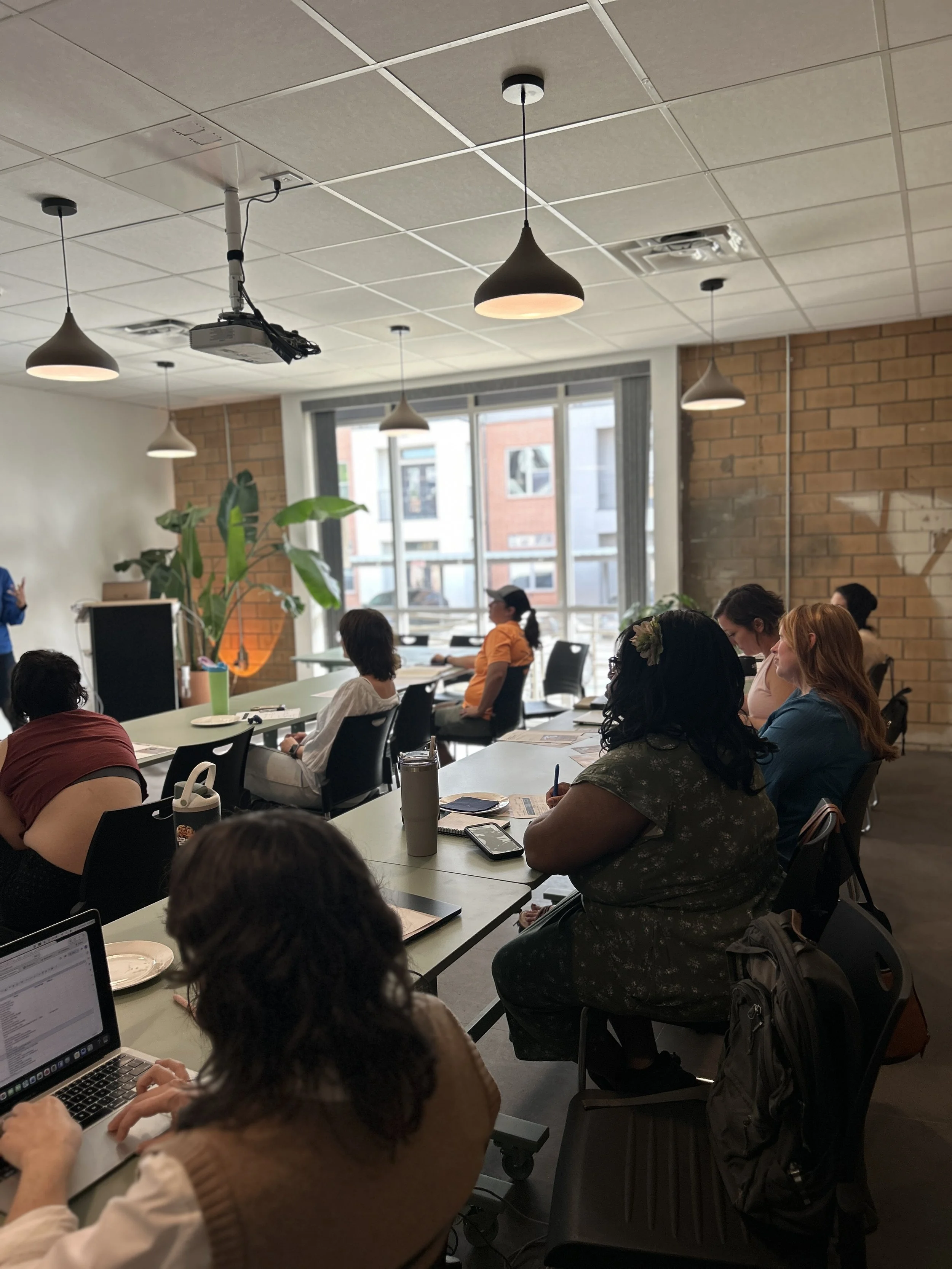
By bringing people from different industries and professional backgrounds into a shared environment, coworking creates opportunities for everyday interactions that might otherwise never happen.
A casual conversation in a common area might lead to a helpful recommendation. A community event might introduce you to a future collaborator. A fellow member might share an experience that changes how you approach a challenge.
And sometimes, simply working around other motivated people can make the workday feel more connected.
At Stoke Coworking in Denton, we believe that building a business and building community can go hand in hand. Through shared workspaces, professional gatherings, educational programming, and opportunities to connect, Stoke brings together people who are working on ideas, businesses, and projects of all sizes.
Your Next Step: Start with One Connection
Building a professional community doesn't happen overnight, and it doesn't require an elaborate strategy.
Start small.
Attend one local event. Introduce yourself to someone working nearby. Reach out to a professional whose work interests you. Ask a question, share an idea, or offer to help someone solve a problem.
Then keep showing up.
Over time, those conversations can become trusted relationships, valuable collaborations, and a stronger foundation for your business.
Because building something of your own doesn't have to mean building it alone.
Find Your Community at Stoke
Whether you're an entrepreneur, freelancer, remote worker, or small business owner, there's room to connect, collaborate, and grow at Stoke Coworking.
Explore our upcoming events, meet other professionals in Denton, and find your next opportunity to connect.